What Are the Differences Between Full Grain, Top Grain, and Split Leather? | SCHAKE
750 Views |

Cowhide leather is one of the most widely used materials for manufacturing a variety of products, including safety shoes, leather gloves, belts, bags, and personal protective equipment (PPE). Its popularity comes from its strength, durability, and ability to withstand demanding working conditions.
However, not all cowhide leather is the same. Depending on which layer of the hide is used and how it is processed, leather can be categorized into several types. The most common are Full Grain Leather, Top Grain Leather, and Split Leather, each offering unique characteristics and applications.
1.Full Grain Leather
Full Grain Leather is the outermost layer of the hide and retains the natural grain surface without sanding or buffing away imperfections. As a result, it preserves the original texture and unique characteristics of the animal hide.
Key Features
-Strongest and most durable type of leather
-Dense fiber structure for superior strength
-Excellent resistance to tearing and wear
-Good breathability
-Develops a rich natural patina over time
-Longest lifespan among leather types
Limitations
-More expensive than other leather grades
-Natural marks, wrinkles, or scars may be visible on the surface
Common Applications
-Premium leather gloves
-High-quality safety footwear
-Luxury bags and leather goods
-Industrial applications requiring maximum durability
2.Top Grain Leather
Top Grain Leather is also made from the upper layer of the hide, but the surface is sanded and refined to remove imperfections and create a smoother appearance. This results in a more uniform and polished look.
Key Features
-Smooth and attractive surface
-Soft and flexible feel
-Lighter than Full Grain Leather
-Easier to maintain
-Comfortable for extended wear
Limitations
-Slightly less durable than Full Grain Leather
-May have a shorter lifespan under heavy-duty use
Common Applications
-Work gloves
-Safety gloves requiring flexibility and dexterity
-Footwear and general leather products
-Tasks involving prolonged handling of tools and equipment
3.Split Leather
Split Leather is produced from the lower layer of the hide after the top grain has been separated. It has a rougher texture and is often similar in appearance to suede leather.
Although it is not as strong as the top layers, Split Leather offers excellent thickness, abrasion resistance, and heat resistance, making it a popular choice for welding gloves and heavy-duty industrial applications.
Key Features
-Good abrasion resistance
-Excellent heat resistance
-Thick and durable construction
-Provides a secure grip on materials
-More economical than Full Grain and Top Grain leather
Limitations
-Less flexible than upper-grain leathers
-Rougher surface texture
-Lower tear resistance compared to Full Grain Leather
Common Applications
-Welding gloves
-Metalworking
-Construction work
-Heavy industrial environments
-Jobs involving heat, sparks, or hot materials
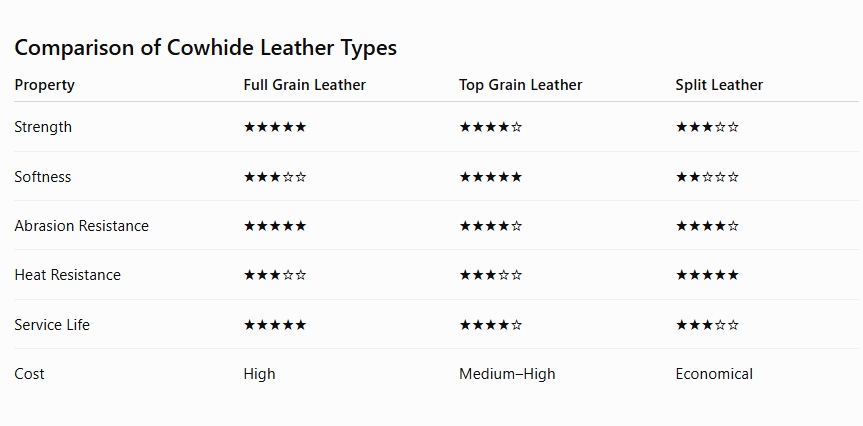
Conclusion
If maximum strength and longevity are the priority, Full Grain Leather is the best choice. For users seeking a softer feel, greater flexibility, and a refined appearance, Top Grain Leather is an excellent option. Meanwhile, Split Leather is ideal for industrial applications, welding work, and environments where heat and abrasion resistance are essential.
Choosing the right type of leather for the intended application can improve performance, reduce equipment wear, and provide better long-term value.


