Mobile vs. Plumbed Emergency Eyewash Stations: Whats the Difference? | SCHAKE
544 Views |

An Emergency Eyewash Station is an essential safety device used in factories, laboratories, warehouses, and other workplaces where employees may be exposed to hazardous chemicals, dust, or airborne particles that could injure the eyes.
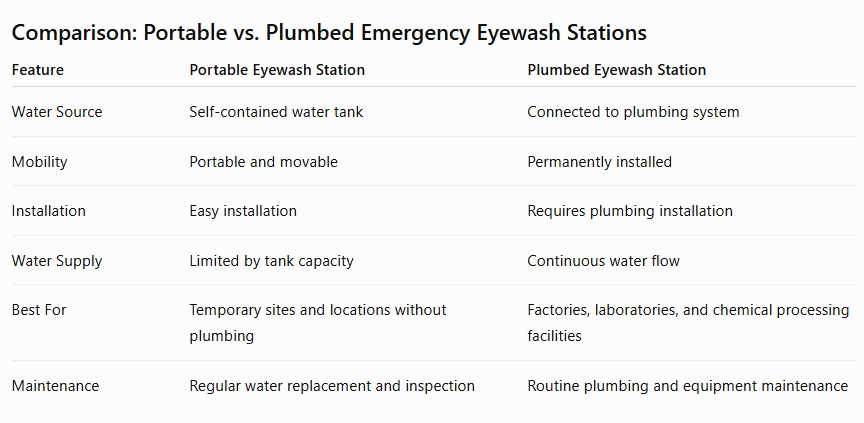
There are two main types of emergency eyewash stations available today: Portable Emergency Eyewash Stations and Plumbed Emergency Eyewash Stations. Each type offers unique advantages and is designed for different working environments.
Portable Emergency Eyewash Station
A Portable Emergency Eyewash Station features a self-contained water tank, allowing it to operate without being connected to a plumbing system. This makes it an ideal solution for locations where a permanent water supply is unavailable or where work areas frequently change.
Key Advantages
-No plumbing connection required
-Easy to move and relocate
-Ideal for construction sites, field operations, and warehouses
-Suitable for temporary work areas
-Quick and easy to install
Considerations
-Water level and water quality should be checked regularly
-Water must be replaced according to the manufacturer's recommendations
-Operating time depends on the water tank capacity
Plumbed Emergency Eyewash Station
A Plumbed Emergency Eyewash Station is directly connected to a water supply, providing a continuous flow of clean water during use. It is best suited for permanent installations in facilities where hazardous chemicals are regularly handled.
Key Advantages
-Continuous water flow
-Ideal for high-risk work environments
-Capable of supporting the flushing duration required by many safety standards
-No need to refill the water tank
Considerations
Requires access to a plumbing system
Cannot be relocated after installation
Installation costs are generally higher than portable models
Plumbing and equipment should be inspected and maintained regularly
Which One Should You Choose?
Choose a Portable Emergency Eyewash Station if:
-Your worksite has no plumbing system.
-Equipment needs to be moved between different locations.
-You operate at construction sites, maintenance areas, or temporary workplaces.
-You need a fast and flexible installation without plumbing work.
Choose a Plumbed Emergency Eyewash Station if:
-Your facility has permanent hazardous work areas.
-A reliable water supply is available.
-Employees regularly work with hazardous chemicals.
-A continuously available eyewash system is required.
T200 Portable Emergency Eyewash Station: The Ideal Solution for Areas Without Plumbing
For workplaces where installing a permanent eyewash station is not practical, the T200 Portable Emergency Eyewash Station provides an effective alternative. Designed for mobility and convenience, it requires no plumbing connection and can be positioned close to high-risk work areas.
The T200 is ideal for factories, warehouses, construction sites, maintenance operations, and other locations where immediate access to emergency eye flushing is essential.
Conclusion
Both Portable and Plumbed Emergency Eyewash Stations play an important role in reducing the severity of eye injuries caused by chemicals, dust, or other hazardous substances. Choosing the right system depends on your work environment, the availability of a water supply, and the level of risk present in your facility.
By selecting the appropriate eyewash station and ensuring regular inspection and maintenance, businesses can improve workplace safety, support emergency preparedness, and help protect employees from serious eye injuries.


